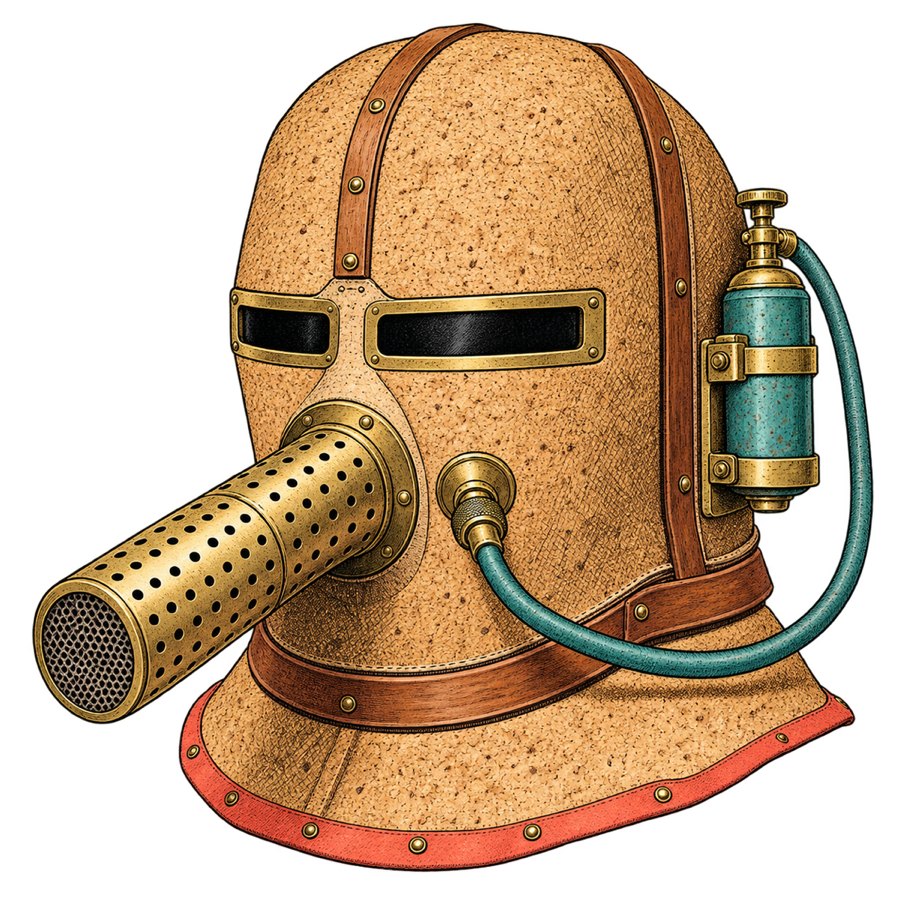
In 1925, inventor and publisher Hugo Gernsback introduced the Isolator, a concentration helmet made from wood, cork, felt, and glass. The first version blocked roughly 75 percent of outside noise. Blackened eye windows reduced vision to narrow slits aimed at the paper below, preventing dangerous workplace distractions such as wallpaper, curtains, and flies.
One flaw remained: after more than fifteen minutes inside, the wearer became drowsy. Gernsback solved this by attaching an oxygen tank. Productivity culture had reached its logical conclusion: seal employee inside furniture, then pipe in enough air to continue working.
Source: Hugo Gernsback, “The Isolator,” Science and Invention, July 1925, transcribed by University of Minnesota Press.
Image: Experimenter Publishing, July 1925, via Wikimedia Commons; public domain in the United States.